
If you’ve ever wondered “how to fillet barramundi” with confidence and precision, you’re in the right place. Filleting barramundi isn’t just about chopping up a fish — it’s a skill that, when done properly, preserves texture, flavor and ensures minimal waste.
With a sharp, flexible fillet barramundi knife, the right setup and attention to each cut, you can turn a whole barramundi into two perfect, bone-free fillets ready for grilling, baking or pan-searing. In this guide, we’ll walk you through every step — from cleaning and gutting, to skinning, trimming, and even making use of the offcuts.
When it comes to preparing barramundi for the table, proper filleting techniques are essential. Using the right fillet knife and following a few simple steps can make all the difference in the quality of the final product.
Fish cleaning is an art that requires some skill and practice, but with the right guidance, anyone can become proficient.
Key Takeaways
- Cleaning and gutting fish immediately is crucial for maintaining its quality.
- Proper filleting techniques are essential for preparing barramundi.
- Using the right fillet knife is vital for achieving high-quality fillets.
- Fish cleaning is a skill that can be learned with practice and guidance.
- Following simple steps can make a big difference in the final product.
Understanding Barramundi: Australia’s Premier Fish
Barramundi is renowned for its delicate flavor and firm texture, making it a favorite among Australian seafood enthusiasts. This prized fish is not only a staple in Australian cuisine but also a popular choice for both recreational and commercial fishing.
What Makes Barramundi Special
Barramundi stands out due to its versatile culinary applications and nutritional benefits. It is rich in protein, low in fat, and contains essential omega-3 fatty acids, making it a healthy choice for consumers.
Why Proper Filleting Matters
Proper filleting is crucial to bring out the best qualities of barramundi. Expert filleting ensures that the fish is prepared correctly, maximizing its flavor and texture. According to Michael Reynolds, a renowned expert in seafood preparation, “Proper filleting techniques can make a significant difference in the overall dining experience.”
| Characteristics | Benefits |
|---|---|
| Delicate Flavor | Versatile in recipes |
| Firm Texture | Retains moisture when cooked |
| Rich in Protein | Nutritional benefits |
Essential Tools for Filleting Barramundi
The art of filleting barramundi begins with understanding the tools of the trade. Having the right equipment not only makes the process easier but also ensures that you achieve professional-quality fillets.
The Right Knife for the Job
A sharp, flexible fillet knife is indispensable for filleting barramundi. Michael Reynolds recommends using such a knife to make precise cuts. A good fillet knife should be thin, flexible, and have a sharp edge to navigate the fish’s contours smoothly.
Additional Equipment You’ll Need
In addition to a fillet knife, a steel mesh glove is highly recommended to protect your hand while filleting. Other useful tools include a cutting board and a pair of tweezers or pliers for removing pin bones.
Setting Up Your Workspace
Setting up a clean and organized workspace is crucial. Ensure your cutting board is stable, and all your tools are within easy reach. This setup will help you work efficiently and safely.
| Tool | Purpose |
|---|---|
| Fillet Knife | Making precise cuts through the fish |
| Steel Mesh Glove | Protecting your hand from cuts |
| Cutting Board | Providing a stable surface for filleting |
| Tweezers or Pliers | Removing pin bones from the fillet |
Preparing Your Barramundi for Filleting
Preparing your Barramundi for filleting is a crucial step that ensures a clean and efficient process. This initial preparation phase is vital for achieving high-quality fillets.
Cleaning the Fish
Begin by rinsing the Barramundi under cold running water to remove any loose debris. Gently rub the fish’s body to dislodge dirt or blood that may have accumulated. This step is essential for ensuring the fish is clean before filleting.
Proper Handling Techniques
When handling the Barramundi, it’s crucial to support its body fully to avoid causing damage to the flesh. Hold the fish firmly but gently, making sure not to squeeze it too hard, which could result in bruising.
Safety Precautions
Always handle the knife and fish with care. Keep your fingers curled under and out of the way of the blade. Be mindful of the sharp edges and points, and consider wearing cut-resistant gloves for added protection.
By following these steps, you’ll be well-prepared to fillet Barramundi efficiently and safely.
How to Fillet Barramundi: Step-by-Step Guide
Learning to fillet barramundi is a skill that can elevate your cooking and provide a more enjoyable dining experience. Filleting fish can seem intimidating at first, but with the right guidance, it becomes a straightforward process.
Positioning the Fish Correctly
To start filleting your barramundi, you need to position it correctly. Place the fish on a stable, flat surface, with its belly facing towards you. Ensuring the fish is secure will make the filleting process safer and more manageable.
Right-Handed vs Left-Handed Technique
Whether you’re right-handed or left-handed, the technique for filleting barramundi remains largely the same. The key difference lies in how you hold the fish and the direction of your cuts. For right-handed individuals, hold the fish with your left hand and make cuts with your right. For left-handed individuals, reverse this.
Making the Initial Cuts
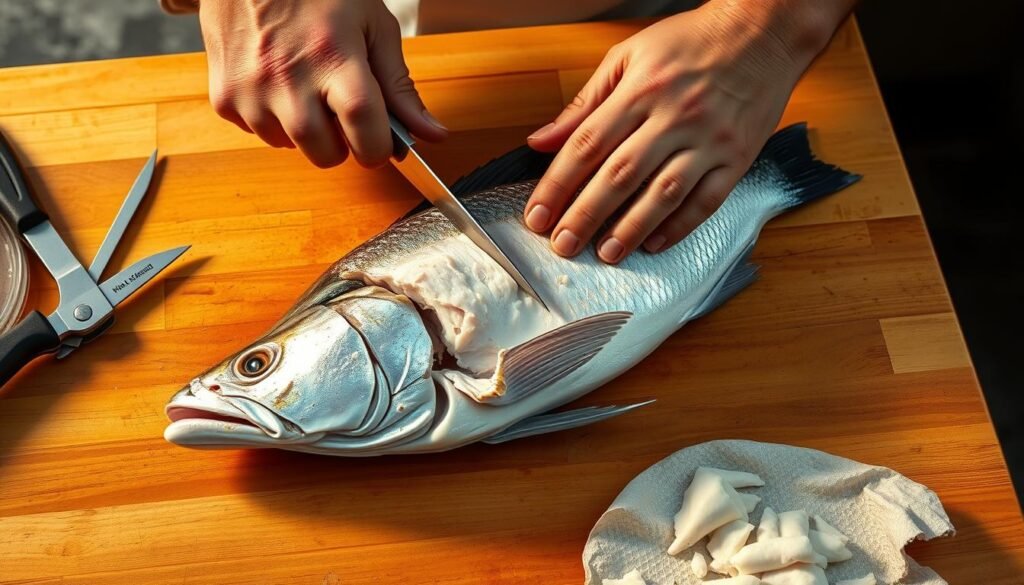
The initial cuts are crucial for successful filleting. Begin by making a cut behind the gills and down towards the belly. This cut should be firm and precise.
Behind the Gills
Making a cut behind the gills is the first step in separating the fillet from the rest of the fish. Use a sharp filleting knife and ensure the cut is deep enough to reach the backbone.
Along the Backbone
Next, make a cut along the backbone, starting from the head and moving towards the tail. This cut should be gentle yet firm, following the natural curve of the spine.
Removing the First Fillet
With the initial cuts made, you can now start removing the first fillet. Work your knife along the ribcage, carefully separating the fillet barramundi from the bones.
Working the Knife Along the Ribcage
Use a gentle sawing motion to work the knife along the ribcage. This will help you release the fillet without leaving any bones behind. Take your time to ensure a clean cut.
Flipping and Repeating for the Second Fillet
Once you’ve removed the first fillet, flip the fish over and repeat the process for the second fillet. The steps remain the same, so you’ll be making similar cuts on the other side.
By following these steps, you’ll be able to fillet barramundi efficiently and effectively, resulting in high-quality fillets ready for cooking.
Skinning Your Barramundi Fillets
Now that you’ve successfully filleted your barramundi, it’s time to tackle the next crucial step: skinning. Skinning your barramundi fillets is an essential process that can make a significant difference in the overall quality of your dish.
Preparing the Fillet for Skinning
Before you start skinning, ensure your fillet is properly prepared. Place the fillet skin-side down on a clean, flat surface. Pat the fillet dry with paper towels to remove excess moisture, which can make the skinning process easier and more effective.
Technique for Clean Skin Removal
To remove the skin, start by making a small incision at one end of the fillet, just deep enough to reach the skin. Gently pry the skin away from the flesh and then, holding the skin firmly, slide your knife between the skin and the fillet, keeping the blade as close to the skin as possible. Continue this process along the length of the fillet, applying gentle pressure to avoid tearing the flesh.
Common Skinning Mistakes to Avoid
One of the most common mistakes when skinning fillets is applying too much pressure, which can result in tearing the flesh. Another mistake is not keeping the knife close enough to the skin, leading to wastage of the fillet. Practice makes perfect, so don’t be discouraged if it takes a few attempts to get the hang of it.
By following these steps and tips, you’ll be able to skin your barramundi fillets like a pro, ensuring they’re ready for your favorite recipes.
Removing Bones and Trimming
After successfully filleting your Barramundi, the next crucial step is removing bones and trimming the fillets for perfect presentation. This process ensures your fillets are not only delicious but also visually appealing.
Locating Pin Bones
Pin bones are small, needle-like bones that can be found along the lateral line of the fillet. To locate them, run your fingers over the fillet, feeling for the slight protrusions where the bones are embedded. It’s essential to be gentle to avoid damaging the surrounding flesh.
Techniques for Bone Removal
To remove pin bones, use a pair of clean tweezers or pliers. Grasp the bone as close to the flesh as possible and pull it out in the direction it lies. Be careful not to tear the flesh. For more stubborn bones, you may need to use a bit more force, but always be cautious.
Final Trimming for Perfect Fillets
After removing the bones, inspect your fillets for any remaining imperfections or excess flesh. Use a sharp knife to trim these areas, ensuring your fillets are neat and uniform. This final step makes a significant difference in the presentation of your dish.
By following these steps, you’ll achieve beautifully prepared Barramundi fillets, ready for cooking.
Making the Most of Your Barramundi
Barramundi is a versatile fish that offers more than just its fillets. Once you’ve filleted your catch, you can explore various ways to utilize the entire fish, reducing waste and maximizing your culinary enjoyment.
Using the Whole Fish
Using the whole fish is not only economical but also environmentally friendly. You can use the frames and offcuts to make a delicious fish stock or soup, adding depth to your dishes.
Read Also: Hearty Barramundi Soup: Nourishing Recipe – 3 Variations
Ideas for Fish Frames and Offcuts
Fish frames and offcuts can be repurposed in several creative ways. Here are a few ideas:
- Make a fish stock by simmering the frames and offcuts with vegetables.
- Use the offcuts in a fish pie or fish cakes.
- Create a flavorful fish broth by combining the frames with herbs and spices.
| Use | Description | Benefit |
|---|---|---|
| Fish Stock | Simmer frames and offcuts with vegetables | Adds depth to dishes |
| Fish Pie/Cakes | Use offcuts in recipes | Reduces waste, delicious meal |
| Fish Broth | Combine frames with herbs and spices | Flavorful and nutritious |
Sustainable Fishing Practices
Embracing sustainable fishing practices is crucial for the long-term health of our oceans. When catching barramundi, ensure you’re following local guidelines and regulations to help maintain a balanced ecosystem.
Sustainable practices include: catching fish during appropriate seasons, avoiding overfishing, and respecting marine protected areas.
Now that you’ve mastered the art of filleting barramundi, it’s time to enjoy the fruits of your labor. Cooking barramundi is a delight, as it’s a versatile fish that can be prepared in numerous ways. Whether you prefer it grilled, pan-seared, or baked, barramundi’s mild flavor and flaky texture make it a perfect choice for any meal.
When enjoying filleted fish, consider pairing it with a variety of sides to enhance the dining experience. A simple salad, steamed vegetables, or a flavorful quinoa dish can complement the rich taste of barramundi. Experiment with different seasonings and marinades to find your favorite way of cooking this Australian favorite.
Read Also: The Best Sides for Barramundi: 15 Perfect Pairings
By following the steps outlined in this guide, you’re not only able to fillet barramundi like a pro but also to appreciate the value of cooking it to perfection. So, get creative in the kitchen and enjoy the delicious rewards of your filleting skills.