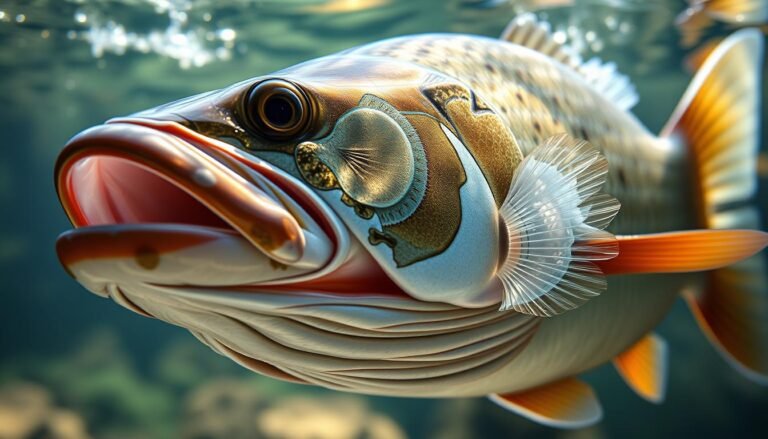
You’ve likely heard of barramundi, a fish prized for its mild flavor and firm texture. Scientifically known as Lates calcarifer, this catadromous fish is native to the Indo-West Pacific region.
As we explore the different types of Barramundi, you’ll discover the various fish types within this category and their habitats. This knowledge will help you understand their significance in both ecological and commercial contexts.
Key Takeaways
- Barramundi is a catadromous fish native to the Indo-West Pacific region.
- The species is known for its mild flavor and firm texture.
- Different types of Barramundi exist within the Lates calcarifer category.
- Understanding Barramundi habitats is crucial for ecological and commercial purposes.
- Barramundi is a significant species in both local and global contexts.

The Iconic Australian Barramundi
As we explore the world of Australian fish, the Barramundi emerges as a standout species, rich in history and cultural value. The Australian Barramundi, known for its impressive size and flavorful flesh, is a prized catch for anglers and a species of great ecological importance.
Scientific Classification and Taxonomy
The Australian Barramundi is scientifically classified as Lates calcarifer, a member of the Latidae family. This classification is crucial for understanding its evolutionary relationships and ecological role.
Cultural and Historical Significance
The Barramundi holds significant cultural and historical importance, particularly in Indigenous Australian culture. It has been a vital food source and features in various traditional practices and stories.
Economic Value in Australia
The Barramundi contributes substantially to Australia’s economy through the fishing industry and aquaculture. Its economic value is further enhanced by recreational fishing tourism, which supports local communities.
| Aspect | Description | Importance |
|---|---|---|
| Cultural Significance | Feature in Indigenous culture and traditions | High |
| Economic Contribution | Supports fishing industry and tourism | High |
| Ecological Role | Plays a vital role in the ecosystem | Critical |
The Australian Barramundi is a true icon, embodying cultural heritage, economic value, and ecological significance. Understanding and conserving this species is essential for maintaining the balance of Australian waters.
Major Barramundi Species and Varieties
As you explore the diverse world of Barramundi, you’ll discover several species that have adapted to various aquatic environments. The diversity within the Barramundi family is quite fascinating, with different species exhibiting unique characteristics suited to their habitats.
Lates calcarifer: The Common Barramundi
Lates calcarifer, commonly known as the Barramundi, is the most widespread species. It’s found in the coastal waters, estuaries, and rivers of Australia and Southeast Asia. This species is highly adaptable, able to thrive in both fresh and saltwater environments. Lates calcarifer is not only significant for its ecological role but also for its economic importance in commercial and recreational fishing.
Asian Barramundi Variants
In Southeast Asia, you can find various Barramundi variants that have evolved due to geographical isolation. These Asian Barramundi variants are similar to Lates calcarifer but may have distinct genetic differences. They are an important part of the regional aquatic ecosystem and are also targeted by local fisheries.
Regional Subspecies and Genetic Differences
Regional subspecies of Barramundi have developed genetic differences due to their isolation in different river systems and coastal areas. Understanding these genetic differences is crucial for conservation efforts and for the sustainability of aquaculture practices. Research into these regional subspecies helps in developing targeted management strategies for Barramundi populations.
| Species/Variant | Habitat | Characteristics |
|---|---|---|
| Lates calcarifer | Coastal waters, estuaries, rivers | Highly adaptable, significant for fishing |
| Asian Barramundi Variants | Southeast Asian waters | Genetic differences, important for local ecosystems |
| Regional Subspecies | Various river systems and coastal areas | Genetic differences due to isolation |
Geographical Distribution of Barramundi Species
You can find Barramundi in the coastal waters, estuaries, and rivers of northern Australia and Southeast Asia, showcasing their adaptability to different environments. Their ability to thrive in various habitats is a testament to their resilience and ecological importance.
Northern Australian Populations
In northern Australia, Barramundi are abundant in the coastal waters and river systems. They are particularly prevalent in the Northern Territory and Western Australia, where they inhabit rivers, estuaries, and mangrove swamps. The tropical climate and diverse aquatic environments provide ideal conditions for their growth.
Southeast Asian Distribution
In Southeast Asia, Barramundi are found in countries such as Indonesia, Malaysia, and the Philippines. They inhabit freshwater rivers, estuaries, and coastal areas, often migrating between these environments for breeding purposes. The species has adapted well to the region’s diverse aquatic ecosystems.
Migration Patterns and Breeding Grounds
Barramundi are known to migrate between freshwater and saltwater environments for breeding. This migration is crucial for their lifecycle, as it allows them to spawn in optimal conditions. Understanding these migration patterns is essential for managing Barramundi populations sustainably.
| Region | Habitat | Migration Pattern |
|---|---|---|
| Northern Australia | Rivers, estuaries, coastal waters | Freshwater to saltwater |
| Southeast Asia | Freshwater rivers, estuaries, coastal areas | Saltwater to freshwater for breeding |
Physical Characteristics and Identification
Identifying Barramundi involves examining their unique physical characteristics and growth patterns. These features not only help in distinguishing them from other species but also provide insights into their behavior and ecological role.
Size and Growth Variations
Barramundi can grow up to 1.8 meters in length and weigh up to 60 kg, making them one of the larger freshwater fish species. Their size can vary significantly based on factors such as age, habitat, and availability of food.
Distinctive Features Across Species
One of the most distinctive features of Barramundi is their silver scales, which can vary in color depending on their environment. This adaptability in coloration is a key identifier for the species.
Life Cycle and Sexual Dimorphism
Barramundi exhibit a fascinating life cycle characterized by sequential hermaphroditism, where individuals typically start as males and change sex to females as they mature. This unique reproductive strategy is crucial for their survival and success in various environments.
Understanding the life cycle and physical characteristics of Barramundi is essential for both conservation efforts and recreational fishing practices. By recognizing these features, we can better appreciate the importance of this species in Australian waters.
Conservation and Commercial Significance
The Barramundi species holds a vital place in both ecological and economic contexts in Australia. As a key species in Australian waters, Barramundi contribute significantly to the ecosystem while also supporting important commercial and recreational fisheries.
Ecological Role in Australian Waters
Barramundi play a crucial ecological role in Australian waters, contributing to the balance of their ecosystems. They are a key predator species, helping to regulate the populations of other fish and aquatic organisms. Ecosystem balance is maintained through their feeding habits and interactions with their environment.
- Predator species regulation
- Ecosystem balance maintenance
- Habitat utilization
Aquaculture Practices and Sustainability
Aquaculture practices for Barramundi are being developed with a focus on sustainability. Efforts include improving feed efficiency, reducing environmental impact, and promoting genetic diversity. Sustainable aquaculture practices are crucial for ensuring the long-term viability of Barramundi farming. Sustainable practices help in maintaining healthy fish populations and minimizing ecological footprint.
Recreational Fishing and Tourism Impact
Recreational fishing for Barramundi is a popular activity, contributing to local economies through tourism. The economic benefits of recreational fishing are significant, supporting businesses related to fishing tourism, such as guided tours and equipment sales. However, it’s essential to manage these activities sustainably to prevent overfishing and habitat degradation.
- Economic benefits through tourism
- Need for sustainable management
- Impact on local communities
You’ve now explored the diverse world of Barramundi, delving into their various barramundi species, habitats, and significance. This Barramundi overview highlights the importance of understanding these remarkable fish, from their scientific classification to their economic and ecological value.
As we continue to learn more about Barramundi, it’s clear that conservation efforts, sustainable aquaculture practices, and responsible recreational fishing are crucial for their future. By adopting these practices, we can ensure the long-term sustainability of Barramundi populations, preserving their role in Australian waters and beyond.
In summary, Barramundi are a fascinating and valuable species, warranting our appreciation and protection. By working together to conserve and manage Barramundi populations effectively, we can enjoy these incredible fish for generations to come.