Barramundi is a versatile and delicious white fish, known for its mild flavour and high omega-3 content. It’s a great choice for home cooks looking to prepare healthy meals.
This fish can be cooked in various ways, from simple home meals to gourmet restaurant dishes. Mastering different cooking methods can elevate your barramundi recipes and bring out its unique flavour.
With its numerous health benefits and adaptability in the kitchen, barramundi is an excellent addition to any meal. Whether you’re a seasoned chef or a beginner in the kitchen, knowing the right techniques is key to preparing mouth-watering barramundi fillet.
Key Takeaways
- Understand the health benefits of barramundi
- Learn various methods for cooking barramundi fillet
- Discover new barramundi recipes to try at home
- Master simple cooking techniques for delicious meals
- Explore the versatility of barramundi in different cuisines
Understanding Barramundi: Australia’s Premier Table Fish
Barramundi is not only a staple in Australian seafood cuisine but also a fish that is rich in nutrients and adaptable to various cooking methods. This versatility, combined with its mild flavor and firm texture, makes it a favorite among Australian home cooks and chefs alike.
How to Select the Freshest Barramundi at Markets and Shops
Selecting the freshest barramundi is crucial for a delicious meal. When purchasing, look for fish with clear, bright eyes, and shiny scales that are firmly attached to the skin. The flesh should be firm to the touch, and there should be no strong fishy odor. If buying fillets, ensure they have a moist appearance and are free of browning around the edges.
Tips for Buying Barramundi:
- Check for freshness indicators like clear eyes and shiny scales.
- Ensure the flesh is firm and has a pleasant smell.
- For fillets, look for a moist appearance without browning.
Wild-Caught vs. Farmed Barramundi: What’s Best for Your Dish
The debate between wild-caught and farmed barramundi often centers around taste, nutritional value, and environmental impact. Wild-caught barramundi is praised for its natural flavor and firmer texture, while farmed barramundi is more readily available and can be more sustainable. Understanding the differences can help you make an informed choice based on your cooking needs and preferences.
| Characteristics | Wild-Caught Barramundi | Farmed Barramundi |
|---|---|---|
| Taste | More complex, natural flavor | Milder flavor |
| Texture | Firmer texture | Softer texture |
| Availability | Seasonal, less consistent supply | More readily available |
| Environmental Impact | Varies depending on fishing methods | Can be more sustainable with proper farming practices |
The Nutritional Profile and Health Benefits of Barramundi
Barramundi is renowned for its nutritional benefits, being rich in omega-3 fatty acids, low in mercury, and a good source of protein. It’s an excellent choice for those looking for a healthy seafood option. The omega-3 fatty acids in barramundi support heart health and brain function, making it a great addition to a balanced diet.
Nutritional Highlights of Barramundi:
- High in omega-3 fatty acids
- Low in mercury
- Good source of protein
By understanding the characteristics of barramundi, including how to select the freshest fish, the differences between wild-caught and farmed, and its nutritional benefits, home cooks can make informed decisions to enhance their cooking and dining experiences.
Essential Barramundi Cooking Tips for Home Chefs
To elevate your cooking, understanding the essentials of preparing barramundi is key. Whether you’re cooking for a family dinner or impressing guests, barramundi’s versatility makes it an excellent choice. Here, we’ll explore crucial techniques to enhance your barramundi cooking experience.
Scaling, Filleting, and Deboning Techniques for Whole Barramundi
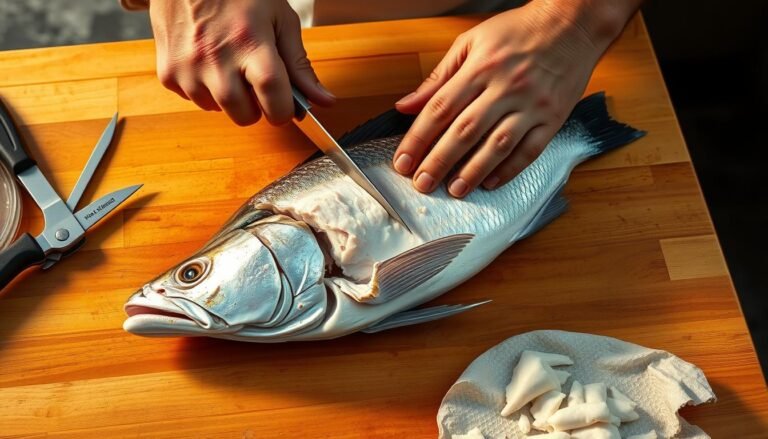
Preparing whole barramundi requires some skill, starting with scaling, filleting, and deboning. Scaling involves removing the scales, usually with a fish scaler or the back of a knife. For filleting, make a cut behind the gills and along the spine, then carefully remove the fillet. Deboning involves removing the bones, which can be done with tweezers or a deboning knife.
A quote from a renowned chef highlights the importance of proper preparation: “The art of cooking fish lies in its preparation. A well-prepared fish is half-cooked.” –
“The way you cut and prepare your fish can significantly impact the final dish’s texture and presentation.”
| Technique | Description | Tools Needed |
|---|---|---|
| Scaling | Removing scales from the fish | Fish scaler or knife |
| Filleting | Cutting the fish into fillets | Sharp filleting knife |
| Deboning | Removing bones from the fillet | Tweezers or deboning knife |
The Critical Importance of Properly Drying Your Fillets
Drying your barramundi fillets before cooking is crucial for achieving the perfect texture. Pat the fillets dry with paper towels to remove excess moisture. This step is essential for pan-searing or grilling, as it helps create a crispy exterior.
For pan-searing barramundi, a dry fillet ensures a golden-brown crust. Similarly, when grilling barramundi, drying the fillets prevents them from steaming instead of searing.
Effective Marinating Methods and Timing for Enhanced Flavour
Marinating barramundi can add depth and complexity to your dish. A simple marinade of lemon juice, olive oil, and herbs can enhance the fish’s natural flavor. For a more exotic taste, try an Asian-inspired marinade with soy sauce and ginger.
- Marinate for at least 30 minutes to allow flavors to penetrate.
- Avoid over-marinating, as it can make the fish mushy.
- Refrigerate while marinating to prevent bacterial growth.
For a delicious and flavorful dish, try pairing your marinated barramundi with a lemon butter sauce. The acidity and richness complement the fish perfectly, creating a well-balanced meal.
Mastering Different Cooking Methods for Barramundi
Mastering the art of cooking barramundi involves understanding the various techniques that bring out its natural flavors and textures. Different cooking methods can significantly enhance the dining experience, making barramundi a versatile choice for home cooks.
Achieving Perfectly Crispy Skin When Pan-Searing
Pan-searing is a popular method for cooking barramundi, especially when aiming for a crispy skin. To achieve this, start by ensuring the fillets are dry, as excess moisture can prevent crispiness. Pat the fillets dry with paper towels before seasoning. Heat a skillet over medium-high heat and add a small amount of oil. Place the fillets skin-side down and cook until the skin is golden and crispy. Avoid flipping the fillets too early, as this can disrupt the formation of the crust.
Once the skin is crispy, flip the fillets and cook for another few minutes until they’re cooked through. This technique not only adds texture but also enhances the flavor of the fish.
Grilling Barramundi Without Drying It Out
Grilling barramundi can be a bit tricky, as it requires balancing the heat to cook the fish through without drying it out. Brushing the fillets with oil and seasoning them before grilling can help retain moisture. Preheat the grill to a medium heat and place the fillets on the grill. Cook for a few minutes on each side, depending on the thickness of the fillets.
To prevent drying, it’s crucial to not overcook the barramundi. Using a thermometer can help ensure the fish is cooked to a safe internal temperature without overcooking it. Grilling adds a smoky flavor to the fish, making it a great option for those looking for a different taste profile.
Gentle Cooking: Baking, Steaming, and En Papillote Methods
For a more delicate approach, baking, steaming, and cooking en papillote are excellent methods for preserving the moisture and flavor of barramundi. Baking involves placing the seasoned fillets in the oven, where they cook gently in a controlled environment. This method allows for even cooking and can be paired with various herbs and lemon for added flavor.
Steaming is another gentle method that retains the fish’s moisture. By steaming the barramundi, you can infuse it with flavors from herbs and spices without losing its natural taste. Cooking en papillote, where the fish is wrapped in parchment paper with aromatics and cooked in the oven, is a French technique that results in a moist and flavorful dish.
Each of these methods offers a unique way to enjoy barramundi, highlighting its versatility and the variety of flavors that can be achieved through different cooking techniques.
Advanced Barramundi Cooking Tips and Flavour Pairings
To elevate your barramundi cooking, exploring advanced techniques and flavour pairings is essential. Barramundi’s mild flavour makes it a versatile canvas for a variety of culinary experiments.
Traditional Australian Herb and Spice Combinations
Australia’s native herbs and spices can add a unique twist to your barramundi dishes. Consider using lemon myrtle, known for its citrusy flavour, or Tasmanian pepperberry for a subtle kick. These ingredients not only enhance the fish’s natural taste but also connect your dish to Australia’s rich culinary heritage.
Some effective combinations include:
- Lemon myrtle and garlic for a zesty marinade
- Tasmanian pepperberry and olive oil for a simple yet elegant seasoning
- Native thyme and lemon juice for a refreshing herb crust
Asian-Inspired Barramundi Recipes and Techniques
Asian cuisine offers a wealth of inspiration for barramundi cooking. Techniques like steaming with ginger and soy sauce or grilling with a sweet chilli glaze can transform your dish. Incorporating ingredients like star anise, coriander, and coconut milk can also add depth and complexity.
Some popular Asian-inspired methods include:
- Steaming barramundi with ginger and scallions
- Pan-searing with a soy sauce and honey glaze
- Baking in a coconut milk curry sauce
Perfect Wine, Beer, and Side Dish Pairings for Barramundi
Pairing barramundi with the right beverage and side dishes can elevate your dining experience. For wine, a crisp Sauvignon Blanc or a rich Chardonnay complements the fish’s delicate flavour. Beer enthusiasts might enjoy a light lager or a pale ale.
Some excellent side dish options include:
- Roasted vegetables with a citrus vinaigrette
- Quinoa salad with fresh herbs and a light dressing
- Grilled asparagus with a sprinkle of parmesan cheese
By exploring these advanced cooking tips and flavour pairings, you can create a truly memorable barramundi dish that showcases your culinary skills.
Conclusion: Elevating Your Barramundi Cooking Skills
Mastering the art of cooking barramundi can elevate your culinary skills and impress your family and friends with delicious, restaurant-quality dishes. By understanding the nuances of this versatile fish and applying the various barramundi cooking tips outlined in this article, home cooks can achieve outstanding results.
Experimenting with different cooking methods for barramundi, such as pan-searing, grilling, baking, and steaming, allows you to discover your preferred techniques and create a wide range of barramundi recipes. Whether you’re looking to prepare a simple weeknight dinner or a special occasion meal, the tips and techniques provided will help you get the most out of this exceptional fish.
By combining the right cooking methods with traditional Australian herb and spice combinations or Asian-inspired flavors, you can create mouth-watering barramundi dishes that are sure to please even the most discerning palates. So, don’t be afraid to try new barramundi recipes and explore the many culinary possibilities that this fantastic fish has to offer.