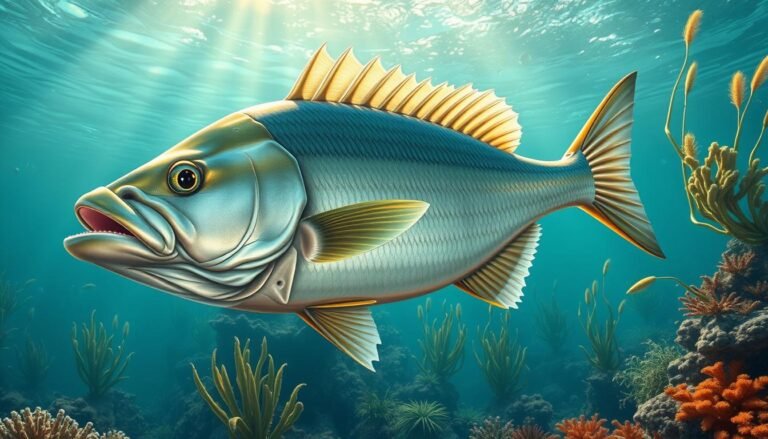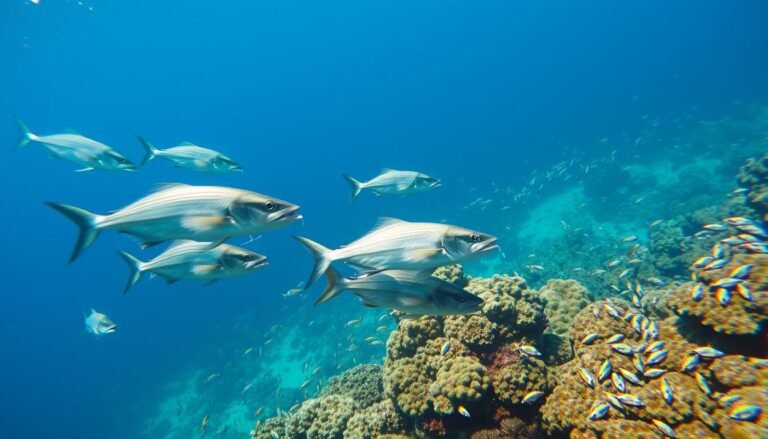
You might be wondering how the barramundi thrives in both freshwater and saltwater environments. This remarkable fish has adapted to survive in two different worlds, making it a fascinating subject to explore.
The barramundi is a species of catadromous fish that is widely distributed in the Indo-West Pacific region. Its ability to survive in different water types is a testament to its remarkable adaptability.
As we explore the barramundi’s behaviour and physical characteristics, you’ll discover how this fish manages to thrive in both freshwater and saltwater habitats.
Key Takeaways
- The barramundi is a catadromous fish that can survive in both freshwater and saltwater.
- Its adaptability is a key factor in its ability to thrive in different environments.
- The fish is widely distributed in the Indo-West Pacific region.
- Understanding the barramundi’s behaviour is crucial to appreciating its survival strategies.
- The barramundi’s physical characteristics play a significant role in its ability to adapt to different water types.
The Remarkable Barramundi: Australia’s Iconic Fish
As you explore the diverse waterways of Australia, you’ll discover the remarkable barramundi, a fish that has adapted to thrive in both freshwater and saltwater environments. This adaptability is just one aspect that makes the barramundi so fascinating.
Physical Characteristics and Natural Range
The barramundi is known for its impressive size and striking appearance. They are demersal, inhabiting coastal waters, estuaries, lagoons, and rivers, and are found in clear to turbid water, typically within a temperature range of 26−30 °C. Their ability to thrive in various conditions is a testament to their hardiness.
Distribution Across Australian Waterways
Barramundi are widespread across Australian waterways, from the coastal regions to the freshwater rivers and lakes. Their distribution is not limited by extensive migrations, which has led to the establishment of genetically distinct stocks in Northern Australia.
Economic and Cultural Significance in Australia
The barramundi holds significant economic and cultural value in Australia. It is a prized catch among recreational anglers and a valuable resource for commercial fisheries. The barramundi’s ability to thrive in different environments has made it a focus of both conservation efforts and fishing industries.
Understanding Barramundi Behaviour Across Environments
As we dive into the world of barramundi, you’ll discover how this incredible fish adapts its behavior to thrive in different aquatic environments. The barramundi’s ability to navigate between freshwater and saltwater is a complex process that involves various behavioral adaptations.
Hunting and Feeding Strategies in Freshwater
In freshwater environments, barramundi are opportunistic feeders, consuming a variety of prey including crustaceans, molluscs, and smaller fish. They have been known to feed on their own species, showcasing their adaptability in finding food sources. Juvenile barramundi, in particular, feed on zooplankton, highlighting the diverse feeding strategies employed by this species.
Hunting and Feeding Strategies in Saltwater
When in saltwater, barramundi continue to exhibit flexible feeding behaviors, preying on available fish, crustaceans, and other marine organisms. Their ability to adapt their diet to the saltwater environment is a testament to their euryhaline nature, allowing them to thrive in estuaries and coastal areas.
Movement Patterns and Territory Establishment
Barramundi exhibit complex movement patterns, with individuals migrating between freshwater and saltwater environments for spawning. This migration is crucial for the species’ survival, as it allows for genetic diversity and the colonization of new habitats. The establishment of territory is also an important aspect of barramundi behavior, with individuals defending their territory from other barramundi.
| Environment | Primary Food Sources | Movement Patterns |
|---|---|---|
| Freshwater | Crustaceans, molluscs, smaller fish, zooplankton | Residence, occasional migration to saltwater for spawning |
| Saltwater | Fish, crustaceans, marine organisms | Migration for spawning, foraging |
Physiological Adaptations for Dual Water Environments
As you explore the world of barramundi, you’ll discover the fascinating physiological adaptations that allow this fish to survive in diverse aquatic environments. These adaptations are crucial for the barramundi’s survival, enabling them to thrive in both freshwater and saltwater.
Osmoregulation: Managing Salt Balance
Barramundi have developed impressive osmoregulation strategies to manage their salt balance in different water environments. In freshwater, they absorb salts through their gills, while in saltwater, they excrete excess salts. This process is vital for maintaining proper bodily functions. For more information on fish adaptations, you can visit this resource.
Osmoregulation in barramundi is a complex process involving multiple physiological changes. They can adjust their gill function, kidney function, and even the composition of their bodily fluids to suit the surrounding water conditions.
Gill Structure Modifications Between Environments
The gill structure of barramundi undergoes significant modifications when transitioning between freshwater and saltwater environments. In freshwater, the gills are adapted to absorb salts, while in saltwater, they’re modified to excrete excess salts. This flexibility is essential for the barramundi’s survival in diverse aquatic environments.
Sensory Adaptations for Different Waters
Barramundi also exhibit sensory adaptations that enable them to navigate and find prey in different water environments. Their senses, including vision and olfaction, are adjusted to suit the characteristics of the surrounding water. This allows them to detect food and avoid predators effectively, regardless of whether they’re in freshwater or saltwater.
These physiological adaptations, including osmoregulation, gill structure modifications, and sensory adaptations, make the barramundi an incredibly resilient species. Their ability to thrive in both freshwater and saltwater environments is a testament to their remarkable flexibility and adaptability.
The Barramundi Life Cycle: Navigating Between Waters
As we explore the barramundi’s life cycle, we uncover the fascinating journey this fish takes between freshwater and saltwater. The barramundi’s ability to migrate between these environments is crucial for its survival and plays a significant role in its life cycle.
Spawning Migration from Fresh to Saltwater
The barramundi’s life cycle begins with a spawning migration from freshwater to saltwater. Adult barramundi migrate downstream to estuaries and tidal flats, where they spawn in the brackish waters. This migration is triggered by factors such as changes in water temperature, flow, and salinity.
Spawning typically occurs in areas with suitable habitat and food availability, ensuring the larvae have the best chance of survival.
Larval Development in Estuaries
After spawning, the larvae develop in the estuaries, feeding on the abundant food sources available. The brackish environment provides a unique mix of nutrients and shelter, supporting the growth of the larvae.
The larvae undergo several developmental stages, gradually adapting to the changing water conditions. This adaptability is crucial for their survival as they grow and eventually migrate to different environments.
Juvenile Return to Freshwater Habitats
As the juveniles grow, they begin their migration back to freshwater habitats. This return journey is critical, as it allows them to exploit the resources available in freshwater environments and continue their growth.
The juveniles face various challenges during their migration, including navigating through changing water conditions and avoiding predators. The successful completion of this journey is vital for the barramundi’s life cycle.
Environmental Triggers for Migration
Environmental factors such as water temperature, flow, and salinity play a significant role in triggering the barramundi’s migration. Changes in these factors signal the barramundi to migrate, ensuring they move between environments at the optimal time.
| Environmental Factor | Effect on Barramundi Migration |
|---|---|
| Water Temperature | Influences spawning and migration timing |
| Water Flow | Triggers downstream migration to estuaries |
| Salinity | Affects larval development and juvenile migration |
Conclusion: Conservation Challenges and the Future of Barramundi
As we explore the barramundi’s remarkable ability to thrive in both freshwater and saltwater environments, it’s clear that this Australian fish faces significant conservation challenges. The barramundi is an important species for both commercial and recreational fisheries, making its conservation crucial for maintaining healthy populations.
Research has shown that around 27.9% of barramundi exhibit catadromy, with varying proportions across different regions. Habitat connectivity is vital for the viability of wild barramundi populations and associated fisheries. However, anthropogenic landscape modifications, such as dams and weirs, disrupt natural river flow patterns and hinder the upstream movement of fish.
To ensure the long-term sustainability of barramundi, it’s essential to address these conservation challenges. This includes improving habitat connectivity and managing freshwater resources to allow juvenile barramundi to access freshwater habitats. By working together to protect this iconic species, we can preserve the ecosystems it inhabits and secure the future of barramundi for generations to come.
Effective barramundi conservation requires a comprehensive approach that balances human needs with the needs of this remarkable fish. By understanding the complex life cycle and behavior of barramundi, we can develop targeted strategies to address the conservation challenges facing this species.