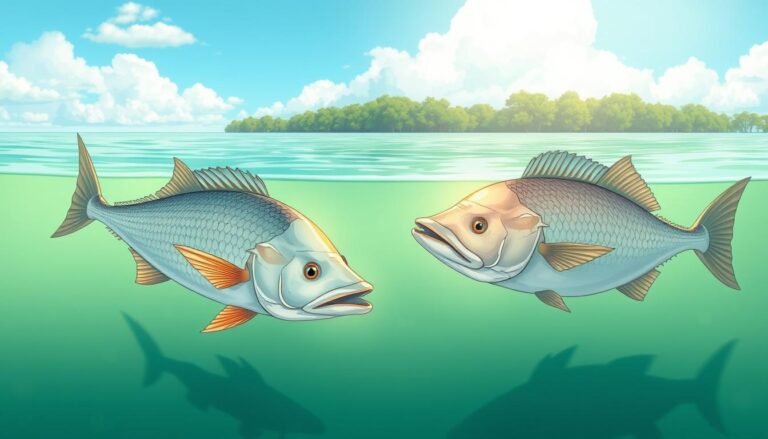
You might be fascinated to learn about the incredible journey of barramundi as they migrate from freshwater or brackish environments to spawn in estuaries or coastal areas.
These remarkable fish undergo a complex lifecycle, transitioning through various stages from larvae to adults. As they grow, they adapt to different aquatic environments, showcasing their incredible resilience.
Understanding the barramundi lifecycle is crucial for appreciating their ecological significance and the challenges they face due to environmental changes and fishing practices.
Key Takeaways
- The lifecycle of barramundi involves migration from freshwater to saltwater environments.
- Barramundi undergo various lifecycle stages, adapting to different aquatic environments.
- Understanding barramundi migration patterns is essential for conservation efforts.
- The lifecycle of barramundi is influenced by environmental factors and fishing practices.
- Conserving barramundi populations requires a comprehensive understanding of their lifecycle.
Understanding Barramundi: Australia’s Iconic Fish
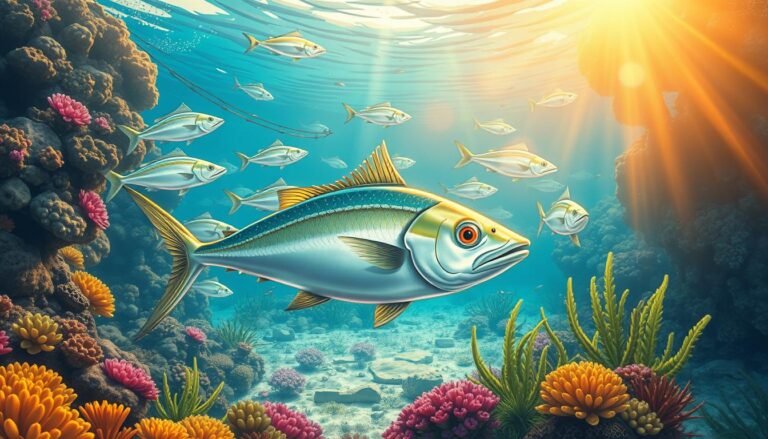
In the diverse aquatic landscapes of Australia, the barramundi stands out as an iconic fish, cherished by locals and visitors alike. As you delve into the world of barramundi, you’ll discover their unique characteristics and the significant role they play in Australian culture and economy.
Physical Characteristics and Distribution
Barramundi are characterized by their elongated body, compressed at the sides, with a high caudal peduncle. They are found in the Indo-West Pacific region, including northern Australia. Their distinctive physical characteristics make them well-adapted to their environments, thriving in various water conditions.
| Characteristics | Description |
|---|---|
| Body Shape | Elongated, compressed at the sides |
| Caudal Peduncle | High |
| Distribution | Indo-West Pacific region, including northern Australia |
Cultural and Economic Significance in Australia
Barramundi hold significant cultural and economic value in Australia, particularly in the context of recreational and commercial fishing. They are a prized catch for anglers, and their cultural significance is evident in the many fishing communities across the country. For more information on barramundi and their importance in Australian waters, you can visit this page.
The economic impact of barramundi fishing is substantial, supporting local economies through tourism and commercial fishing industries. As a result, conservation efforts are crucial to ensure the sustainability of barramundi populations and the ecosystems they inhabit.
The Complete Barramundi Lifecycle Explained
Barramundi’s lifecycle is a remarkable journey that starts with spawning in saltwater environments, followed by critical developmental stages in estuaries and freshwater habitats. Understanding these stages is crucial for appreciating the complex life cycle of this iconic Australian fish.
Spawning in Saltwater Environments
Barramundi spawn in estuaries and coastal areas, typically during the wet season. This period is crucial as it influences the survival and development of the larvae.
Breeding Seasons and Conditions
The breeding season for Barramundi is closely linked to environmental conditions, particularly the onset of the wet season. During this time, the increased freshwater flow into estuaries and coastal areas creates favorable conditions for spawning.
Egg Development and Hatching
After spawning, the eggs develop and hatch in the brackish waters of estuaries. The larvae are then swept by tidal movements into areas with abundant food, enhancing their chances of survival.
“The lifecycle of Barramundi is intricately linked with the environmental conditions of their habitat, making conservation efforts challenging yet crucial.” –
Larval Development and Early Growth
The larval stage is a critical period in the lifecycle of Barramundi. During this stage, they undergo significant development, feeding on small organisms in the estuarine environments.
Juvenile Stage in Estuaries and Freshwater
As the larvae grow, they migrate upstream into freshwater habitats, where they continue to develop into juveniles. This stage is characterized by rapid growth, as they exploit the abundant food resources in these environments.
| Stage | Habitat | Characteristics |
|---|---|---|
| Spawning | Saltwater Environments | Occurs during wet season |
| Larval Development | Estuaries | Feeding on small organisms |
| Juvenile Stage | Freshwater Habitats | Rapid growth |
By understanding the lifecycle of Barramundi, from spawning in saltwater to their development in freshwater habitats, we can better appreciate the ecological significance of this species and the need for conservation efforts to protect their populations.
Migration Patterns: The Journey Between Habitats
One of the most intriguing aspects of Barramundi biology is their catadromous behaviour, migrating from freshwater to saltwater to spawn. This complex process is crucial for their survival and reproduction. As we explore their migration patterns, you’ll gain a deeper understanding of the environmental triggers and navigational abilities that guide them.
Catadromous Behaviour Explained
Barramundi exhibit a unique catadromous behaviour, where they migrate from freshwater or brackish environments to saltwater to spawn. This behaviour is relatively rare in fish species, making Barramundi particularly interesting. Catadromous migration allows Barramundi to take advantage of the rich resources available in different environments, ensuring their survival and successful reproduction.
During their migration, Barramundi undergo physiological changes to adapt to varying water salinities. This adaptability is a testament to their resilience and ability to thrive in diverse aquatic environments.
Environmental Triggers for Migration
Environmental triggers play a significant role in initiating Barramundi migration. Changes in water temperature, flow, and salinity can signal the appropriate time for migration. For instance, increased water flow or specific temperature ranges can trigger Barramundi to move downstream towards spawning grounds.
These environmental cues are crucial for synchronizing the migration with optimal conditions for spawning and larval survival. Understanding these triggers is essential for managing Barramundi populations effectively.
Navigational Abilities and Homing Instinct
Barramundi possess impressive navigational abilities, allowing them to migrate between different habitats with remarkable accuracy. Research suggests that they use a combination of environmental cues, such as magnetic fields, water chemistry, and visual landmarks, to navigate.
“The ability of Barramundi to navigate across vast distances and return to their natal spawning grounds is a testament to their remarkable homing instinct.”
Their homing instinct ensures that Barramundi can return to the same spawning grounds year after year, maintaining the genetic integrity of their populations.
Ecological Adaptations Throughout the Barramundi Lifecycle
As Barramundi navigate through their lifecycle, they exhibit remarkable ecological adaptations that enable them to thrive in diverse aquatic environments. These adaptations are crucial for their survival and play a significant role in their ability to migrate between different habitats.
Physiological Changes for Different Water Salinities
Barramundi undergo significant physiological changes to adapt to different water salinities, a process that is essential for their survival as they migrate from freshwater to saltwater environments and vice versa. This adaptability is largely due to their ability to osmoregulate, allowing them to maintain the balance of salts and water within their bodies despite changes in the surrounding water salinity. This physiological flexibility is a key adaptation that enables Barramundi to thrive in a wide range of aquatic environments.
Feeding Habits Across Life Stages
The feeding habits of Barramundi change significantly across their lifecycle, reflecting their adaptability to different environments and prey availability. In their early stages, Barramundi feed on small invertebrates and plankton, gradually moving to larger prey as they grow. This shift in feeding habits not only supports their growth but also reflects their ecological role in different aquatic ecosystems. Understanding these feeding habits is crucial for managing Barramundi populations effectively.
Conservation Challenges and Population Management
Despite their adaptability, Barramundi face numerous conservation challenges, including habitat degradation, overfishing, and the impacts of climate change. Effective population management strategies are essential to address these challenges and ensure the sustainability of Barramundi populations. Conservation efforts must consider the ecological adaptations of Barramundi and how they interact with their environment across their lifecycle. By doing so, we can work towards preserving this iconic species for future generations.
Conclusion: The Remarkable Journey of Barramundi
The lifecycle of barramundi is a complex and fascinating journey that involves migrations between different habitats, adaptations to various environments, and significant ecological and cultural importance in Australia. As you’ve explored the different stages of their lifecycle, you’ve gained a deeper understanding of the challenges they face and the importance of conservation efforts.
Understanding the barramundi lifecycle is crucial for maintaining the health of aquatic ecosystems in Australia. By appreciating the intricate relationships between barramundi and their environments, we can better manage their populations and ensure the long-term sustainability of this iconic species.
As we continue to learn more about barramundi conservation, it’s clear that protecting their habitats and managing their populations effectively is vital. By working together, we can help preserve the remarkable journey of barramundi for future generations to enjoy.